Pavé Diamond Ring
Lesson 1 of 34
Overview
Sign in to access this lesson
This lesson is part of Pavé Perfection: Gemstone Detailing & Setting, which can come bundled with a RhinoArtisan Commercial license subject to current promotions. Log in with your customer account, or get in touch and we'll set you up.
Customers only
Solo para clientes
This lesson is part of Pavé Perfection: Gemstone Detailing & Setting, which can be included with a RhinoArtisan Commercial license subject to current promotions. If you've already purchased and don't see it in your account, get in touch.
Downloads
A pavé ring lives or dies on its foundation. Get the underlying form clean and the diamonds fall into place; leave a single curve intersection open and the whole layout unravels downstream. This project starts from one irregular reference curve and builds outward — offsets, a classic shank and careful boolean work give you a double-sided band, which RhinoArtisan’s pavé tools then fill face to face with diamonds grading from 0.8 to 1.3 mm.
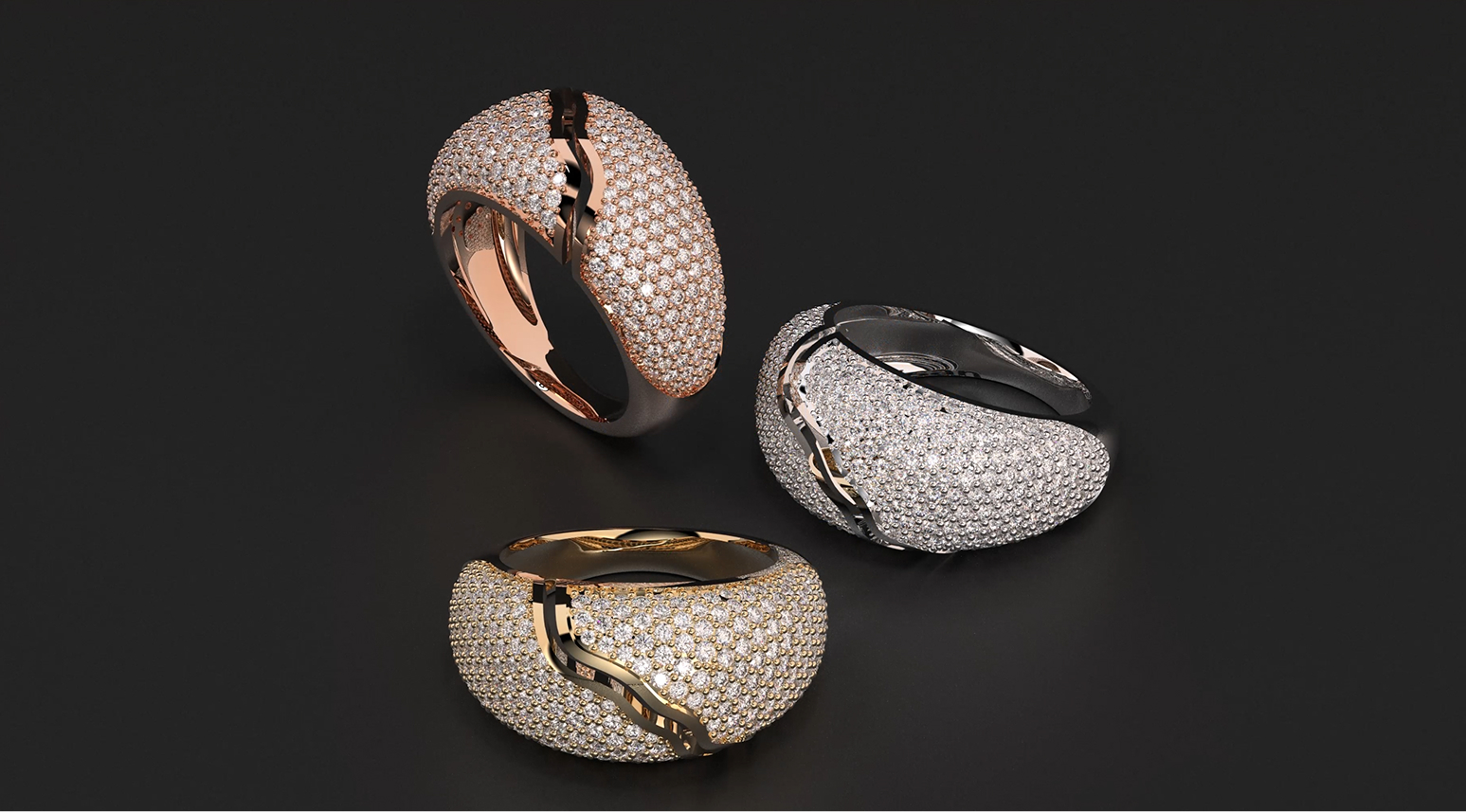
Design a pavé diamond ring using RhinoArtisan.
In this tutorial you will learn how to:
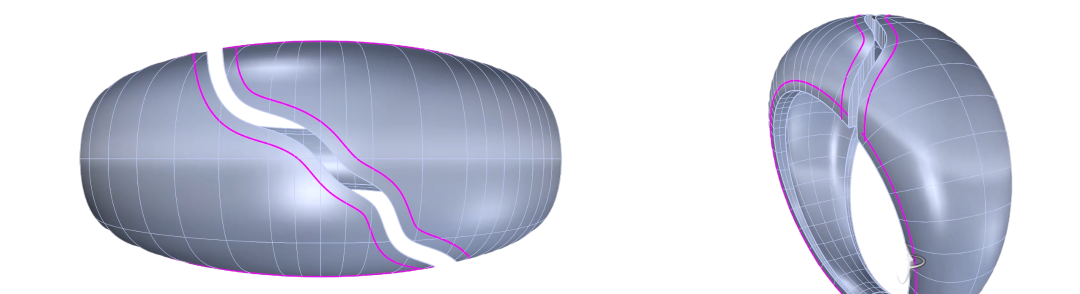
- Build the ring body by running Offset on the reference curve, shaping a Classic Ring shank with custom profiles, and carving the band with Boolean Difference.
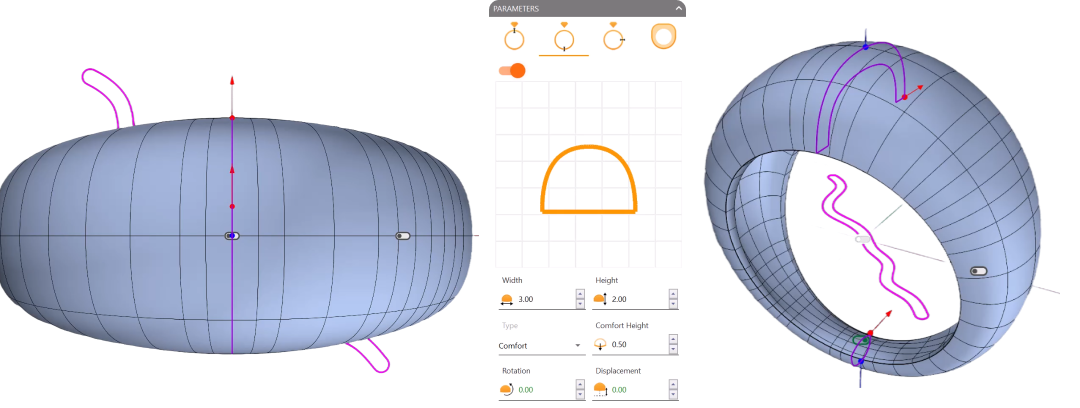
- Generate placement guides with Offset on Surface, join them using Blend, Project them onto the solid, and confirm every crossing with Intersect.
- Extract Face the two inner surfaces and fill them with Automatic Pave using Pave from Point, grading diamonds from 0.8 to 1.3 mm.
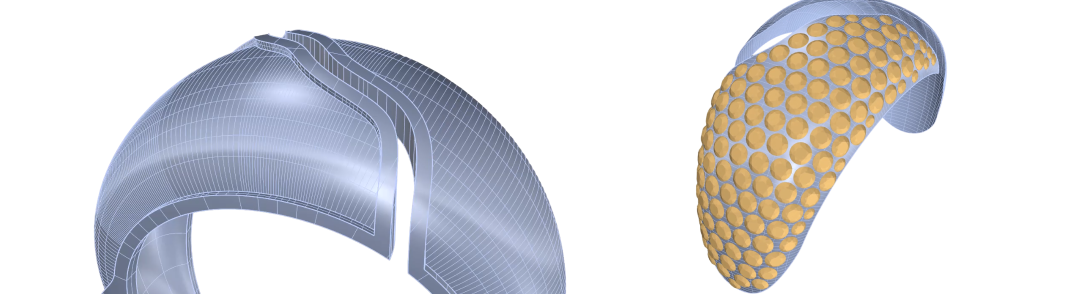
- Secure the stones with automatic prongs, repeat the pavé on the opposite face, then open clean seats with cutters and a final Boolean Difference.
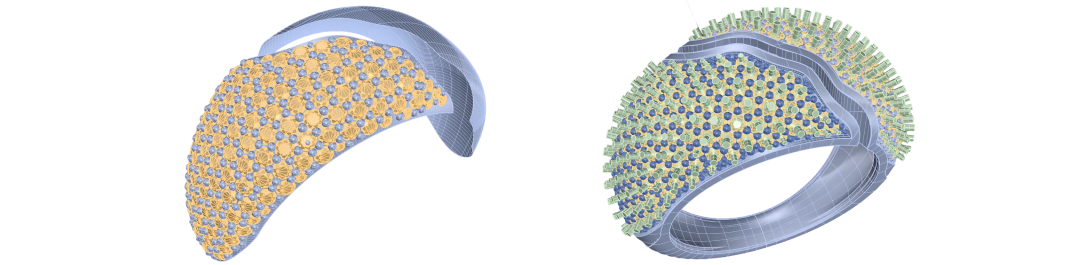
By the end of this project, you’ll have the skills to model a double-sided pavé diamond ring from scratch.
Almost there — you still have some lessons to complete. Jump to the next one →
Impersonating — progress and reviews are disabled.
Course completed
You've completed Pavé Perfection: Gemstone Detailing & Setting 🎉
Great work. Get your certificate of completion and, if you have a minute, let other jewelers know what you thought of the course.